How to Keep Your Home Smelling Fresh When You Have Pets
Pets make a home feel more lively, but they can also bring a few extra odors along with them. Between accidents, litter boxes, wet fur, pet bedding, and the occasional mystery smell coming from the carpet, keeping a pet-friendly home fresh can require a little more attention.
The good news is that you do not need to constantly cover odors with heavy fragrances. A better approach is to remove the source of the smell, clean the areas pets use most often, and build a few simple habits into your routine.
Here are some practical ways to keep your home smelling cleaner and fresher when you share it with pets.
1. Wash Pet Bedding Regularly
Pet beds, blankets, and favorite sleeping spots can hold onto oils, fur, dirt, and odors surprisingly quickly.
If the bedding is machine washable, try to add it to your regular laundry routine rather than waiting until it starts to smell. Removable covers make this much easier.
You should also pay attention to blankets on the couch, crate liners, and any rugs your pet regularly sleeps on.
Keeping these soft surfaces clean prevents odor from gradually building up throughout the room.
2. Deal With Accidents as Quickly as Possible
Pet accidents are much easier to manage when they are addressed immediately.
Start by absorbing as much moisture as possible instead of aggressively rubbing the area, which can spread the mess deeper into carpet or upholstery.
After removing the initial mess, use a cleaner designed specifically for pet accidents.
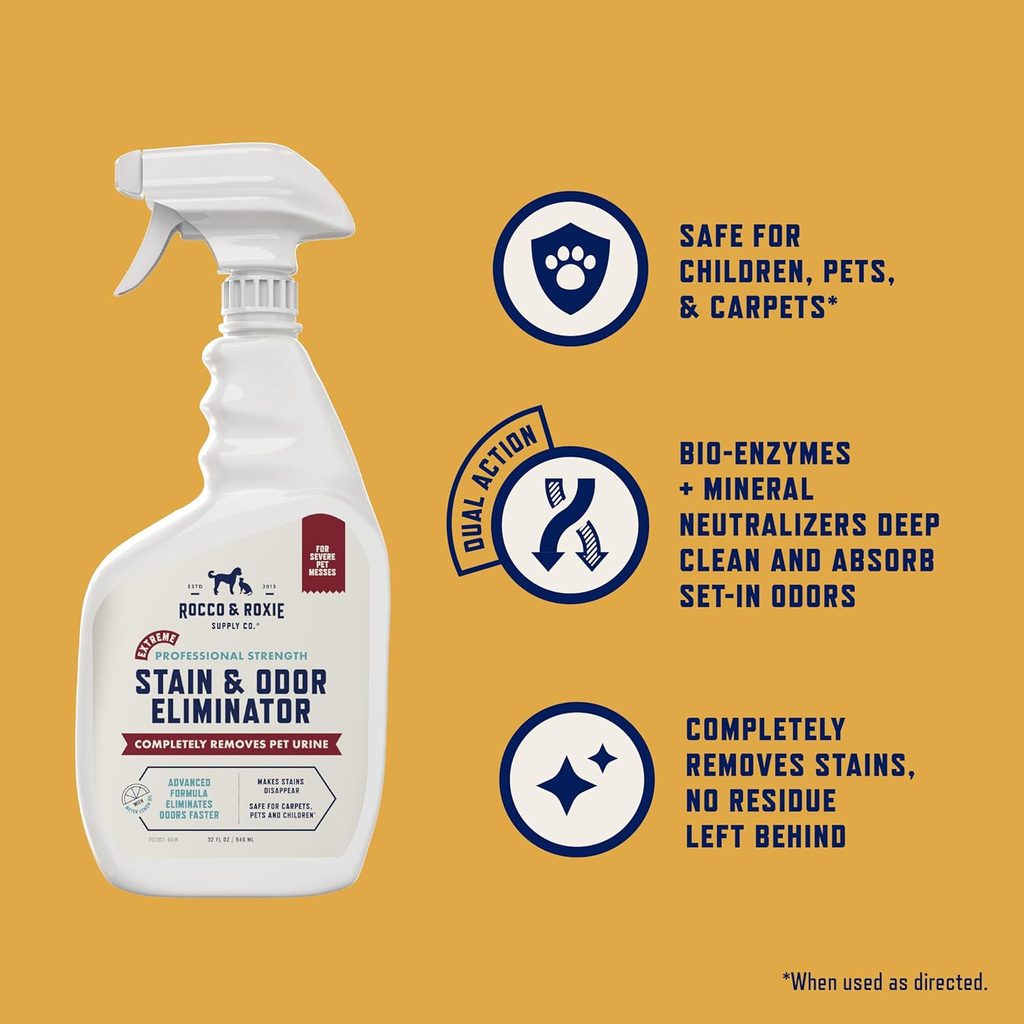
One product worth keeping on hand is Rocco & Roxie Extreme Enzyme Stain & Odor Eliminator Spray. Enzyme-based cleaners are particularly useful for pet messes because they are designed to break down the organic material responsible for stains and lingering odors rather than simply covering the smell with fragrance.
It can be especially useful for areas such as carpets, rugs, upholstery, and other places where pet accidents can soak below the surface.
Having a dedicated pet stain and odor product ready to go also means you can deal with accidents as soon as they happen instead of scrambling to find something that works.
As with any cleaning product, follow the label directions and test it on a small, inconspicuous area first when using it on a new surface.
3. Vacuum More Often Than You Think You Need To
Pet hair itself may not always smell strongly, but it can carry dirt, dander, and oils throughout the house.
Vacuuming regularly helps remove all of that before it settles deeply into carpets and upholstered furniture.
Focus especially on:
- carpets and area rugs
- couches and upholstered chairs
- underneath furniture
- pet sleeping areas
- corners and baseboards where fur collects
If your vacuum has an upholstery attachment, use it on sofas and chairs where your pet spends a lot of time.
Hard floors benefit from frequent sweeping or vacuuming too, particularly around food bowls and litter areas.
4. Keep Litter Boxes Extremely Clean
For cat owners, the litter box is often the biggest source of household odor.
Scooping it frequently is far more effective than trying to mask the smell afterward.
Remove waste every day, replace litter as needed, and periodically clean the box itself according to the manufacturer’s recommendations.
Placement matters too. Keep the litter box somewhere with reasonable ventilation without hiding it in an enclosed space where odors can become concentrated.
If you have multiple cats, having enough litter boxes can also make keeping them clean easier.
5. Do Not Forget Soft Furniture
Couches, upholstered chairs, curtains, and rugs can gradually absorb pet odors without you noticing.
This is especially common when pets are allowed on the furniture.
Vacuum upholstery regularly and wash removable covers when possible. If your couch uses washable throw blankets, rotating and laundering those can be much easier than constantly deep-cleaning the entire sofa.
Pay attention to decorative pillows as well. They are easy to overlook but often sit exactly where pets like to curl up.
6. Groom Your Pet Regularly
Sometimes the smell is coming from the pet rather than the house.
Regular brushing helps remove loose fur, dirt, and debris before it ends up throughout your home.
Bathing frequency depends on the type of pet, breed, coat, lifestyle, and veterinary recommendations, so more bathing is not always better. But keeping your pet appropriately groomed can make a noticeable difference.
Do not forget about collars, harnesses, and fabric leashes either. These items can develop odors over time and may need occasional cleaning.
7. Clean Food and Water Areas
Pet bowls can become messy quickly.
Food crumbs, spilled water, and wet food residue can create unpleasant smells if they are left sitting around.
Wash food and water bowls regularly and wipe the floor underneath them.
A washable mat under the bowls can make cleanup much easier, especially for messy eaters or pets that splash water everywhere.
8. Improve Air Circulation
Fresh air can make a major difference in how a home smells.
When weather allows, open a few windows and let air move through the house.
Ceiling fans and portable fans can also help prevent certain rooms from feeling stale.
If you use an air purifier, make sure the filters are cleaned or replaced on schedule. A neglected filter cannot do its job effectively.
Just remember that air fresheners and scented products should be viewed as the finishing touch, not the solution to an underlying odor problem.
9. Create a Simple Pet-Cleaning Routine
The easiest way to keep pet odors under control is to prevent them from building up in the first place.
You do not need to deep-clean your entire home every day.
Instead, create a simple routine:
Vacuum high-traffic areas regularly, wash pet bedding, clean bowls, scoop litter boxes, wipe muddy paws, and address accidents immediately.
Keeping products like Rocco & Roxie Extreme Enzyme Stain & Odor Eliminator Spray with your other pet supplies can also make unexpected messes easier to handle.
A Fresh Home and Pets Can Coexist
Having pets does not mean your home has to smell like you have pets.
Most persistent odors come from a handful of repeat sources: bedding, carpets, upholstery, litter boxes, food areas, and accidents that were not fully cleaned.
Stay on top of those areas, remove odors at the source instead of simply covering them up, and your home can stay comfortable, clean, and fresh while still being a place your pets can fully enjoy.