7 Things You Didn’t Know You Could Clean With a Pressure Washer
Most people think of pressure washers as tools for blasting dirt off driveways, sidewalks, and siding. While those are some of their most common uses, a good residential pressure washer can handle far more than concrete.
With the right nozzle, enough distance, and an appropriate pressure setting, a pressure washer can make quick work of cleaning jobs that would otherwise require a bucket, scrub brush, and plenty of time. The key is matching the amount of pressure to the surface. Delicate materials need a much gentler approach than concrete or masonry.
If you already own a pressure washer—or are considering adding one to your home-maintenance setup—here are seven things you may not have realized you could clean with it.
1. Window Screens
Window screens collect an impressive amount of dust, pollen, cobwebs, and outdoor debris over time. Because the mesh is delicate, they are also one of those household items many people put off cleaning.
A pressure washer can help, but this is definitely a low-pressure job.
Remove the screens from the windows and place them on a flat or supported surface. Use a wide spray pattern, stay well back from the mesh, and test a small section before cleaning the entire screen.
You are not trying to blast dirt away with maximum pressure. The goal is to use the pressure washer more like a powerful rinse.
For particularly delicate, loose, or older screens, a regular garden hose may still be the safer choice.
2. Outdoor Trash and Recycling Bins
Trash cans are easy to forget about until you open the lid and realize something has leaked into the bottom.
Even when you use trash bags, food residue, liquids, dust, and grime can eventually build up inside outdoor bins.
This is one job where a pressure washer can save a lot of unpleasant scrubbing.
Empty the bin, remove loose debris, and spray the inside thoroughly. Adding an appropriate cleaner or soap can help loosen stubborn residue before rinsing.
You can also clean the lid, wheels, handles, and exterior.
Let the bin dry completely before replacing the bag. Doing this occasionally can help keep your outdoor trash area much cleaner and more manageable.
3. Patio Furniture
Outdoor furniture sits through wind, dust, pollen, rain, and everything else the seasons throw at it.
Plastic resin chairs, certain metal furniture, and many durable outdoor tables can often be cleaned much faster with a pressure washer than by hand.
Start with a wide-angle nozzle and moderate distance. Work gradually instead of immediately moving the nozzle close to the surface.
Pay special attention to chair legs, undersides, corners, and textured surfaces where dirt tends to collect.
Use more caution around painted finishes, wicker-style materials, wood, cushions, or older furniture. High pressure can strip coatings or damage softer materials, so always start gently.
4. Outdoor Rugs and Entry Mats
Outdoor mats can hold much more dirt than they appear to.
Mud, sand, pet hair, pollen, food crumbs, and general grime work their way deep into the surface, especially around patios and entryways.
Depending on the material, a pressure washer can give durable outdoor rugs and mats a much deeper rinse than shaking or vacuuming alone.
Lay the rug on a clean driveway or other suitable surface and spray from one end toward the other.
Use a wide spray rather than a concentrated jet. Afterward, allow the rug to dry thoroughly before putting it back in place.
Always check the manufacturer’s cleaning instructions first because not every rug material is designed to withstand pressurized water.
5. Fences
Fences slowly change color without you really noticing.
Dust, algae, dirt, weather exposure, and general outdoor grime can leave vinyl and other durable fencing looking much older than it actually is.
Pressure washing can dramatically refresh the appearance of a fence without replacing or repainting it.
Vinyl fencing is particularly straightforward to rinse, while wood requires a gentler technique because excessive pressure can damage the fibers.
Work in manageable sections and avoid holding the spray too close to one spot.
If you plan to stain or seal a wooden fence afterward, pressure washing can also be part of the preparation process, provided the wood is allowed to dry fully.
6. Garage Doors
The garage door is one of the largest exterior surfaces on many homes, yet it is surprisingly easy to overlook during routine cleaning.
Over time, garage doors collect road dust, cobwebs, pollen, dirt, and splashes from rain.
A pressure washer can make cleaning a large garage door considerably faster.
Use a gentler nozzle and work from top to bottom so dirty water continues moving downward.
Be careful around seals, weather stripping, windows, electrical components, and damaged paint. You generally do not need extreme pressure to make a noticeable improvement.
Cleaning the garage door along with the driveway can make the entire front of the house look refreshed.
7. Garden Tools, Wheelbarrows, and Outdoor Equipment
If you spend much time gardening or working around the yard, you probably have tools covered in dried dirt and mud.
Wheelbarrows, shovels, garden carts, sturdy planters, and other durable outdoor equipment can often be cleaned quickly with a pressure washer.
Instead of manually scraping dried mud from every surface, rinse away loose material and then use the pressure washer to tackle more stubborn buildup.
This is particularly useful at the end of a gardening season when you want to clean equipment before putting it into storage.
Avoid spraying directly into bearings, motors, electrical connections, or other sensitive mechanical parts.
You Don’t Need a Commercial Machine for Everyday Jobs
For most homeowners, there is little reason to buy an enormous commercial pressure washer just to clean patios, fences, outdoor furniture, cars, and other surfaces around the house.
A compact electric model can offer plenty of versatility while being easier to store and bring out for quick weekend projects.
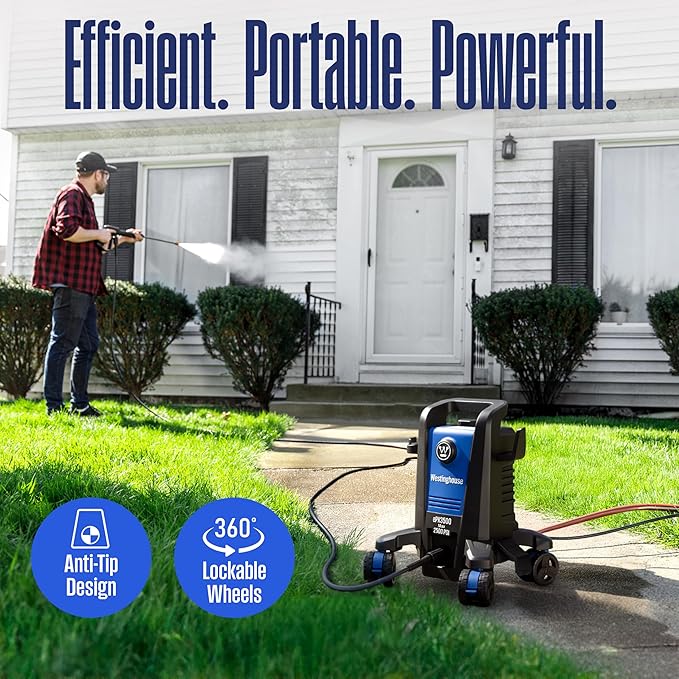
One example is the Westinghouse ePX3500 Electric Pressure Washer, which is designed for residential cleaning and is rated at up to 2500 Max PSI and 1.76 Max GPM.
It also includes features aimed at making household cleaning more convenient, including an onboard soap tank, pro-style steel wand, five-nozzle set, and anti-tipping design.
Having multiple nozzles is particularly useful because not every cleaning job requires the same spray pattern. A driveway can tolerate a very different approach than patio furniture, fencing, or a vehicle.
For someone who wants an affordable residential pressure washer rather than a large professional setup, a machine in this category can cover a surprising number of jobs around the home.
Start With Less Pressure Than You Think You Need
One of the biggest mistakes people make with pressure washers is assuming more pressure always means better cleaning.
It does not.
Too much pressure can damage paint, wood, screens, seals, siding, and other surfaces. Whenever you are cleaning something new, begin with the widest appropriate nozzle, keep some distance between the wand and the surface, and test an inconspicuous area first.
You can always gradually move closer if more cleaning power is necessary.
Used carefully, a pressure washer becomes much more than a driveway-cleaning machine. From window screens and outdoor rugs to trash cans, patio furniture, fences, garage doors, and garden equipment, it can turn a long list of annoying household jobs into much quicker weekend projects.