
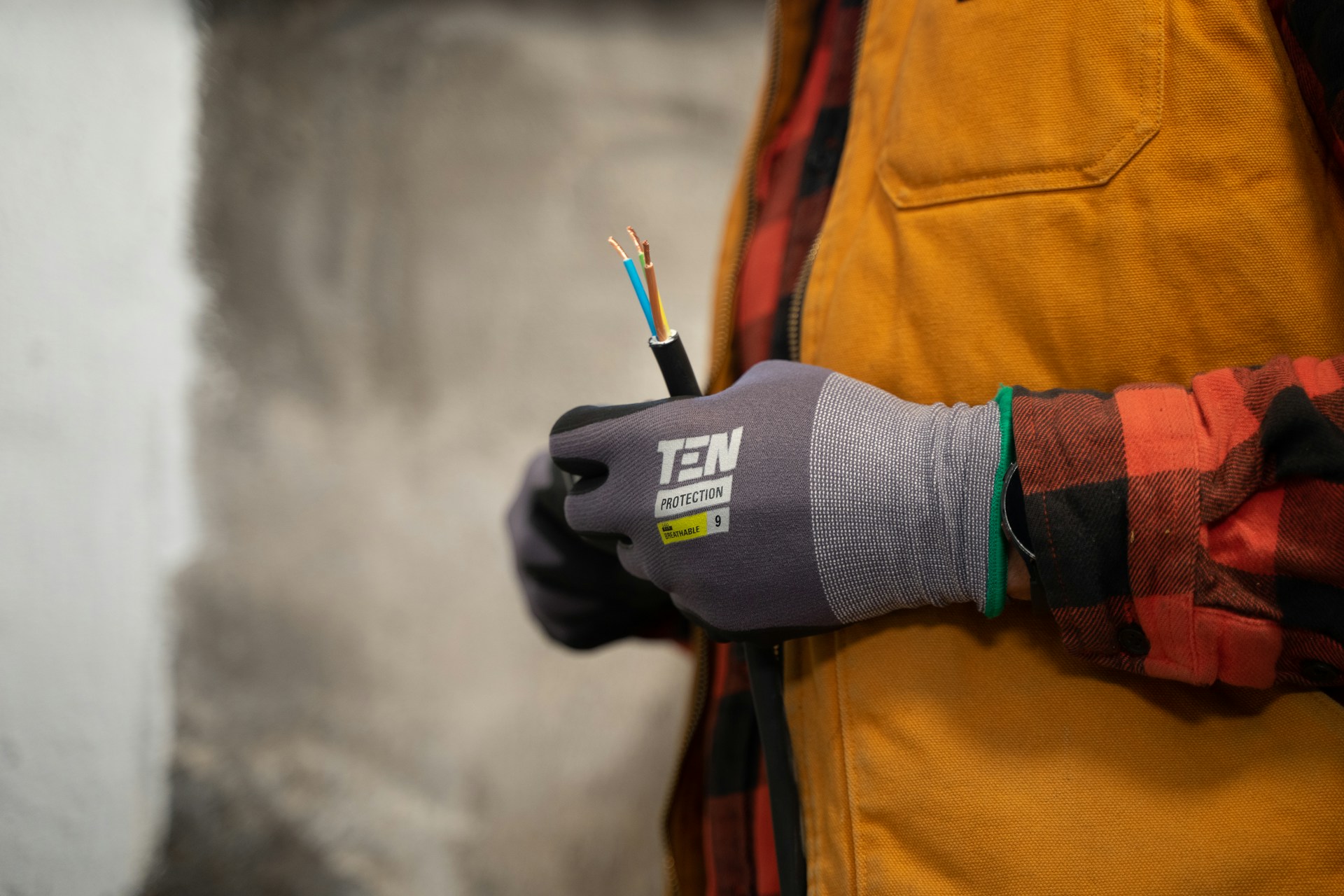
Whether you are wiring a car audio system, connecting solar panels, or running power through your garage, one thing matters more than most people realize:
using the right gauge wire.
Choosing the correct wire size is not just about performance; it is about safety, reliability, and long term durability.
Too small a wire can overheat, drop voltage, or even cause damage to your equipment. Too large, and you will overspend on materials and end up with wiring that is bulky and hard to manage. Finding that perfect balance is what separates an efficient setup from one that is constantly causing issues.
This guide breaks down what wire gauge really means, how to calculate what you need, and why quality matters just as much as size. And when it comes to getting dependable, high quality spools that perform consistently,
GS Power has become a trusted name among DIYers, electricians, and automotive pros alike.
Understanding What “Gauge” Means
When you see a wire labeled as 10 gauge, 12 gauge, or 18 gauge, that number refers to the wire’s diameter. In the United States, wire size is typically measured using the
American Wire Gauge (AWG) system.
Here is the key point:
- The higher the gauge number, the thinner the wire.
- The lower the gauge number, the thicker the wire.
So, a 4 gauge wire is much thicker than a 16 gauge wire and can carry far more current without overheating or losing voltage.
Every wire can safely handle a certain amount of current, measured in amps, over a given distance. If you push more current through a wire than it is rated for, it can cause excessive resistance, and that resistance turns into heat. That is why matching
wire gauge to amperage and length is essential for both performance and safety.
Why Wire Gauge Matters So Much
Choosing the right wire gauge has three major benefits:
- Safety – Undersized wires can overheat and potentially start fires or damage insulation.
- Efficiency – Properly sized wire ensures your devices get the full voltage they need to perform.
- Longevity – Using the correct gauge reduces strain on both your power source and your equipment, extending their lifespan.
For automotive, marine, or solar applications, voltage drop can be especially critical. Even a small loss in voltage can affect performance, like dim lights, weaker sound systems, or slower battery charging.
How to Calculate the Right Wire Gauge
To choose the perfect gauge wire for your setup, you need to know three things:
- Amperage (Current Load) – The amount of current your circuit will draw, measured in amps.
- Distance (Run Length) – How far the wire needs to carry that current.
- Voltage (System Type) – Most automotive systems are 12V, while home circuits are typically 120V or 240V.
Once you know these, you can use a wire gauge chart to determine the correct size.
Example
If you are wiring a 12 volt car amplifier that draws 40 amps and your power cable will be about 10 feet long, you would likely need 8 gauge wire. If you double that distance to 20 feet, voltage drop increases, so you would move up to 6 gauge to maintain efficiency. This small difference in wire thickness can make a big impact on performance and safety.
The Rule of Thumb for Common Uses
Below are general recommendations for copper wire (like what
GS Power provides). These are approximate but very useful for quick reference:
| Current (Amps) | Max Length (10 ft) | Recommended Gauge | Example Use |
|---|---|---|---|
| Up to 15A | — | 14 AWG | Light wiring (LEDs, small electronics) |
| Up to 30A | — | 10 AWG | Car accessories, moderate circuits |
| Up to 40A | — | 8 AWG | Amplifiers, heavy duty accessories |
| Up to 60A | — | 6 AWG | Inverters, high draw devices |
| Up to 100A | — | 4 AWG | Power distribution, high output systems |
| 100A+ | — | 2 AWG or 0 AWG | Battery cables, winches, solar systems |
These guidelines assume short runs; the longer your wire, the thicker it must be to prevent
voltage drop.

The Importance of Voltage Drop
Voltage drop happens naturally as current moves through wire, but too much of it means your equipment will not receive enough power. For low voltage systems like 12V DC circuits, even a small percentage loss can cause major performance issues. That is why automotive, RV, and marine setups often use thicker wire than an equivalent AC system in a house. A good rule is to keep voltage drop under 3% for sensitive electronics or lighting.
Stranded vs. Solid Wire: Which Should You Choose?
Most wire used in automotive, solar, and DIY applications is stranded copper wire, meaning it is made of many smaller strands twisted together.
Stranded wire advantages: more flexible and easier to route, less likely to break when bent or moved, ideal for vehicles, boats, and portable systems.
Solid wire advantages: slightly lower resistance; common in household wiring where wire does not move.
For most hands on projects, stranded copper wire is the right choice, and that is exactly what
GS Power specializes in. Their
premium stranded copper wire spools are built for flexibility, durability, and clean power transfer.

How Insulation Type Affects Performance
When choosing wire, the insulation material matters almost as much as the copper inside. Different jackets handle heat, moisture, and abrasion in different ways.
- PVC (Polyvinyl Chloride): Affordable, flexible, and heat resistant up to around 176°F (80°C).
- XLPE (Cross Linked Polyethylene): Tougher insulation that handles higher temperatures and chemical exposure.
- Tinned Copper Wire: Copper coated with tin to resist corrosion, ideal for marine or outdoor use.
GS Power offers wire with high quality insulation designed to handle automotive heat and vibration while remaining easy to strip and connect.
Color Coding for Easy Identification
Electrical wire color coding helps identify polarity and purpose at a glance:
- Red – Positive power
- Black – Negative or ground
- Yellow – Accessory power
- Blue – Remote or signal lines
- Green – Earth ground
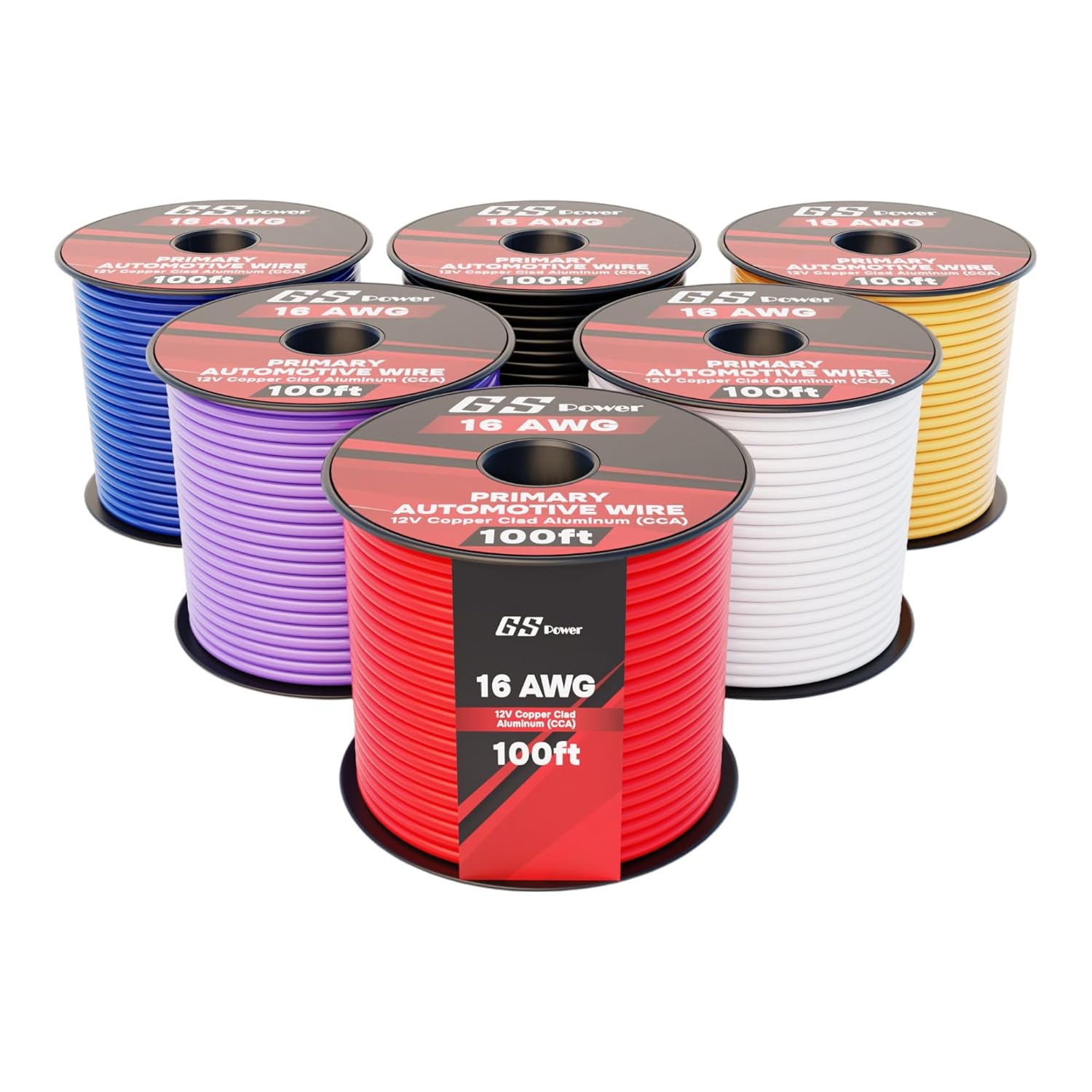
GS Power provides spools in multiple color options, making it easier to build clean, professional wiring setups that are easy to trace later.
Choosing Between Copper and Aluminum Wire
While aluminum wire is sometimes used in large power systems due to its lower cost, it is not ideal for smaller or mobile setups.
Copper advantages: lower resistance for the same gauge, more flexible and durable, handles higher heat without degrading, easier to solder and terminate.
GS Power uses 100% pure copper wire, ensuring reliable conductivity and consistent performance in every application.
When in Doubt, Go Thicker
If you are stuck between two gauges, it is almost always safer to choose the thicker one. A thicker wire can handle more current, run cooler, and maintain better voltage over long distances. Think of it as a small investment in safety and performance. Oversizing by one gauge is far better than risking overheating or failure.
Practical Example: Automotive Setup
Let us say you are installing a 12V air compressor in your truck bed that draws 45 amps and sits 15 feet from the battery. Using a voltage drop calculator, you would find that 8 gauge wire would cause slightly more voltage loss than ideal, so you would move up to 6 gauge wire. With
6 gauge stranded copper wire, you get minimal voltage drop, excellent flexibility for routing, and insulation tough enough to handle heat and vibration. Result: consistent power delivery, no melted fuses, and long term reliability.

Why GS Power Wire Stands Out
GS Power has earned a reputation for durability, consistency, and real world performance. Every spool is designed with professionals and serious DIYers in mind, combining industrial grade quality with fair pricing.
- 100% pure copper for superior conductivity
- Flexible, stranded design for easy routing
- High temp, oil resistant insulation
- Multiple gauge and color options
- Available in bulk spools for ongoing projects
Whether you are wiring a workshop, installing solar panels, or upgrading a vehicle sound system, GS Power makes it easy to stock the right gauge for every job.
Final Tips for Picking the Perfect Gauge Wire
- Know your load and check your devices’ amp rating.
- Account for distance; longer runs need thicker wire.
- Use stranded wire for flexibility and vibration resistance.
- Buy quality copper wire to ensure stable power flow and longevity.
- Label or color code wires for easier troubleshooting later.
Bringing It All Together
Picking the right wire gauge is not just a technical detail; it is the foundation of any reliable electrical setup. A well chosen wire keeps your system efficient, safe, and long lasting. By understanding amperage, distance, and wire construction, you can make confident choices that prevent future problems. And when you are ready to stock up, GS Power provides the high quality copper wire spools professionals trust for everything from automotive and marine projects to home upgrades and solar installations. With the right gauge wire and the right supplier, your setup will deliver power exactly where it is needed, safely and efficiently, for years to come.